Reviewed · WEST ISLAND TOURS
Fishing Villages – Southwest Tour
Madeira’s Southwest fishing villages have a way of feeling both remote and livable. You ride down the island’s steep curves, stop at real towns, and get just enough time in each place to see how people actually live along the coast.
I especially like the variety in a single day. You go from banana-valley views at Ponta do Sol to a lighthouse viewpoint at Ponta do Pargo, then end in the leisure-focused town of Calheta.
One thing to plan around: the schedule can feel short. The tour is advertised as about 8 hours, but at least one group reported a guide saying it was closer to 5, so I would treat it as a half-day style outing rather than a full, long stretch.
Key highlights you can count on
- Free stops with short, purposeful time in each village, not just a quick drive-by
- Southwest variety, from sea cliffs and a lighthouse to promenades and small agricultural settlements
- Hotel pickup and drop-off from Funchal, Camara de Lobos, Cabo Girao, and Canico
- Small group size with a maximum of 14 travelers
- Local “named for the area” details, like Ponta do Pargo being linked to dolphin fish
- English-speaking guide with an air-conditioned ride for comfort
Southwest Fishing Villages from Funchal: what this tour really feels like
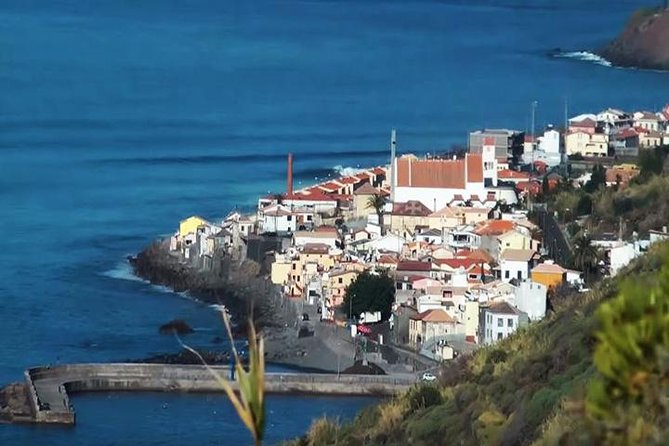
This is the kind of Madeira day trip that makes sense if you want scenery without committing to a long hike. You get an organized route through the island’s Southwest, with a handful of 30-minute village stops that give you time to walk, look, and take photos, without feeling rushed the whole way.
The vibe is practical and scenic. These are not theme-park stops. You’re in working coastal areas, on streets that slope, and in towns where the views matter because the land is so steep. If you like short outings that still feel authentic, this tour fits.
The route also works well for first-timers because it covers very different corners of the Southwest. In one morning you can go from valley agriculture to the far western tip, and then back toward a more relaxed coastal center.
More west side island tours:
- Full-Day Jeep Safari West: Fanal, Porto Moniz, Seixal, Cabo Girão
★ 5.0 · 940 reviews - Jeep Tour Amazing West to Natural Pools -Full-Day
★ 5.0 · 827 reviews - Small Group West Tour Waterfalls & Fanal Forest Tour
★ 4.5 · 397 reviews
Price and logistics: where the $42.59 value comes from
At $42.59 per person, the good value is less about a bargain headline and more about what’s included. You get air-conditioned transport, hotel pickup and drop-off, and a route that strings together multiple coastal towns that would be annoying to stitch together on your own by bus or car.
Also, the stops include free admission tickets for each listed stop, so you are not paying extra at the roadside sites. That matters on a trip like this where you’re spending most of the time on foot and looking around.
Two practical notes. First, you start at 8:30 am and you should have your pick-up process squared away the day before, since the operator asks you to check email or WhatsApp for precise pickup times and locations. Second, the driver waits no longer than 5 minutes after the scheduled pickup time. If you’re the type who likes to linger getting ready, build in a little buffer.
Pickup areas and how to avoid missing the van
Pickup is included around Funchal and Canico, plus Camara de Lobos Village and Cabo Girao areas. If your place is not a hotel, you wait outside by the main entrance. If your hotel is not on their listed group, you’re supposed to specify so pickup can be arranged.
This sounds basic, but on Madeira mornings it can be the difference between an easy start and a stressful one. I’d treat pickup like a meeting with a tight deadline. Step outside a bit early and keep an eye out for the van.
And because this is a small-group tour, once you miss the window, there may not be an easy “catch-up” later. If you’re traveling as a couple or group, also make sure everyone knows the pickup spot, not just the person who booked.
Stop 1: Ponta do Sol, the sunny valley village
Ponta do Sol is one of those names that makes you want to look it up, because it basically means sunny point. This village sits in a steep valley, tucked into the folds of the island, with dense banana plantations overhead.
What I like about this stop is the way it sets the stage for Madeira’s Southwest. You see quickly that agriculture and coast are tangled together here. The view and the angle of the hills tell you why the island has so many terraces and why the towns are built where they can cling to the land.
You get about 30 minutes, which is enough time to stroll a bit, take photos from higher spots, and get your bearings before the ride continues. The only drawback is that 30 minutes can be too short if you want to linger for long sunset-style views. But for a morning, it works.
A few more Funchal days worth comparing
- Private Câmara de Lobos Fishing Village Tour
★ 5.0 · 5 reviews - From Funchal : Big Game Fishing boat trip
★ 2.8 · 4 reviews
Stop 2: Prazeres, the church with oversized towers
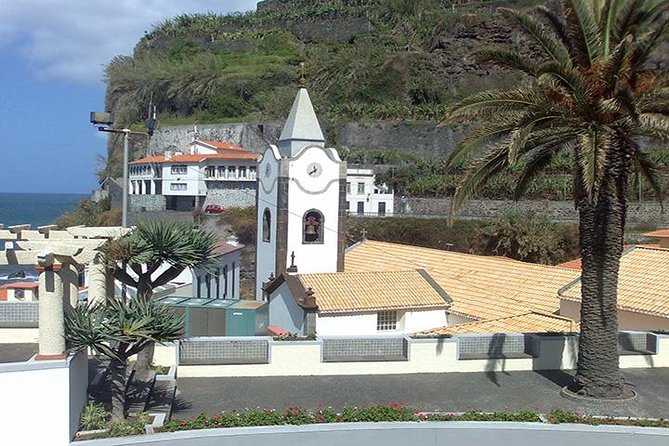
Prazeres is a smaller agricultural settlement centered around a church, and that church is what you notice first. The towers appear far too large for the place, which makes the village feel like it punches above its weight.
This stop also has a strong sense of old Madeira building traditions. Around Prazeres, there are one-room houses built from dark basalt, with walls that have not been plastered. Even if you’re not a history person, you’ll probably feel it when you walk past the homes. The material and the simplicity show up in a way that’s hard to fake.
The catch: you need to enjoy slow looking. This isn’t a big sightseeing stop with a big monument and lots of signage. It’s about noticing details and understanding the setting. If that’s your style, you’ll enjoy it.
Stop 3: Ponta do Pargo and the lighthouse at 312 meters
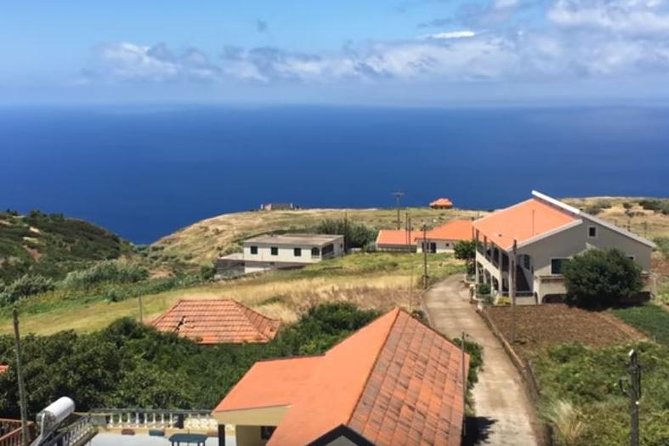
Ponta do Pargo sits on Madeira’s westernmost tip, and the star is the cliff-top lighthouse. It’s 312 meters above the sea, and the elevation is the point. You look out and you instantly understand why sailors and coast watchers would care so much about this area.
The village name comes with an interesting twist. It’s named after dolphin fish, not dolphins. That may sound like a small trivia fact, but it adds a layer of “place meaning” to what you see, especially since the area is known for fishing those species.
You also get fields of vines and vegetables around the village, plus narrow flat land where people have built and worked. In other words, this stop has both view and livelihood baked in.
30 minutes is again the timeframe, so you’ll want to decide quickly where to walk. If you like photo angles, spend the first part of the time looking for a viewpoint first, then use the remainder for a short wander.
One consideration: the far western tip can feel more exposed to wind and weather. This tour requires good weather, so if it’s misty or rough, your view may be limited compared with a clear day.
Stop 4: Paul do Mar, seawater flooding history and a salt factory past
Paul do Mar is a coastal place shaped by the ocean’s mood. Historically, the sea flooded the area and the local site was known as the Sitio da Lagoa or Alagoa, meaning site of the lake. The idea of a lake-like flooding helps explain why the coastline and land use here have a different story than in inland valley towns.
The history is practical. Flooding from the Atlantic was deep enough to inundate fields, and the area developed a salt factory as a response to sea conditions. That salt operation closed long ago, but the legacy shows up in how the landscape was managed.
Today, a key change is credited to infrastructure: with the construction of a new higher sea wall and ocean-front road and parking, sea flooding has stopped. This stop is a good reminder that on Madeira, the environment is powerful, and towns adapt.
30 minutes gives you enough time to walk and read the coastline, but it’s also the type of stop where you should expect less of a “touristy center” and more of a working coast. If you like understanding how coastlines evolve, it’s a strong mid-tour moment.
Stop 5: Jardim do Mar, promenade walks and cliff-town access
Jardim do Mar is the stop that tends to feel easiest on the legs. It has a marine promenade that’s delightful to walk, and it’s one of the more enjoyable places to just slow down and take in the water.
There’s also a dramatic vertical element: a sheer cliff tower above the village. This is part of why Jardim do Mar is associated with surfing in Madeira. The waves and the steep coastline go together.
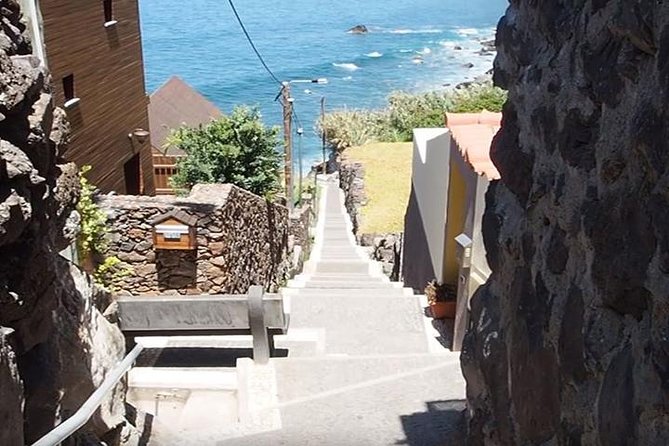
One of the most memorable details here is access. There’s a route up the steep cliff that was once the only way to get in and out of the village. Even if you never take the route yourself, just hearing that changes how you see the settlement. It’s not just scenic. It’s engineered to survive steep terrain.
30 minutes is perfect for a promenade walk, light photos, and a quick look around. If you’re the type who gets chatty with locals, this is also where you might feel the most natural rhythm.
Stop 6: Calheta, a leisure town and an artificial sand beach
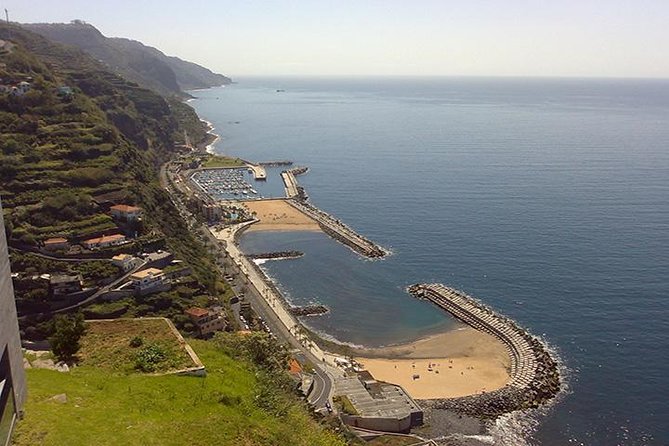
Calheta is the last stop, and it’s a great way to end the tour because the feel becomes more relaxed. Calheta sits in a steep valley above the coast, but the town is set in an inlet near a stream mouth.
Here’s the part I think helps you appreciate why Calheta developed into a leisure area. The region gets a lot of sun, and it also has a recent artificial sand beach. That combination made it easier for the town to grow as a place people come to unwind.
Calheta is described as the main town of the south western coast of Madeira, and it makes sense by the time you get there. You’ve already seen tiny villages and cliff edges. Calheta feels more like a coastal “base” where you could actually spend time later in the day.
The practical value of the last stop is simple: you’ll likely find it easier to think about lunch plans or a next activity after the tour ends here. The tour itself does not include lunch, so you’ll want to plan something for yourself once you’re dropped off.
What I like most: the guide, the pace, and the small-group feel
This tour runs with a maximum of 14 travelers, which changes the quality of the day. You’re not stuck behind a wall of strangers when you want to move to a better viewpoint. It also tends to make the pickup and the stop timing feel more manageable.
I also like that the tour is offered in English. That matters for these kinds of place details, because the value is in understanding what you’re seeing, like why Ponta do Pargo is named for dolphin fish or why Paul do Mar has a story tied to flooding and salt production.
A review name I noted is Bruno, mentioned as the guide. Even if your day includes a different guide, I’d expect the same style of explanations focused on the places, not on generic facts.
One more thing: the experience is designed around short visits, not long lectures. That makes it easier to stay alert on a morning when you’re traveling and walking at least a bit at each stop.
Small weather reality check
This tour requires good weather. On Madeira, weather can change fast, and when it’s off, the views can be muted. If the tour is canceled due to poor weather, you’ll be offered a different date or a full refund.
The tip here is to be flexible in your schedule if you can. If this day trip is the only thing you planned for that morning, you might feel the disruption more.
If you’re traveling in shoulder season or you know the forecast looks changeable, this is the sort of activity where you’d rather have a backup plan than rely on clear skies.
Practical tips so you enjoy every stop
A tour like this is short on time, so your “prep” matters more than your “planning.”
Wear comfortable walking shoes, especially for places where streets slope and lookouts may be reached by stairs or uneven pavement. Bring a light layer too, because coastal cliffs can feel cooler and windier.
Since lunch is not included, decide ahead of time what you’ll do after the tour. If you want a proper meal, look for somewhere near your drop-off. Calheta is a good place to set yourself up for that because it’s described as a leisure town with an artificial sand beach.
If you like photo stops, consider having your camera ready before the van doors open. With only about 30 minutes per village, you lose less time if you move quickly from sightseeing mode to picture mode and then to a short walk.
Should you book the Fishing Villages Southwest Tour?
I think this tour is a good booking if you want to see a lot of Southwest Madeira without building a whole itinerary yourself. You get six village stops, free admissions at the stops, hotel pickup, and a small group size that keeps the day from feeling like a factory line.
You might skip it or adjust your expectations if you want a truly long day with lots of walking, because the experience can feel closer to a half-day depending on timing. Also, bring snacks or plan lunch on your own, since lunch is not included.
My simple decision rule: book it if you love coastal villages, viewpoints, and short but meaningful strolls. Pass or pair it with another activity later in the day if you’re only satisfied by long hikes and deep time at one place.
Recently added around Funchal
- The Lakes Walk★ 5.0 · 13 reviews
- The ultimate tour (2 days)★ 4.5 · 4 reviews
- Enchanting North – Full Day- Shared Tour★ 5.0 · 10 reviews
- The Espetada Evening Food and Cultural Tour★ 5.0 · 5 reviews
- The Fantastic Cascades★ 4.5 · 13 reviews
- traditional Farmers Market Open 4X4 Half Day Tour★ 5.0 · 10 reviews
- Sunset Tour @ Pico Do Areiro | Half Day 4×4 Tour★ 5.0 · 36 reviews
- Madeira: Sunrise at Pico do Arieiro & Hike Larano trail★ 5.0 · 58 reviews
West Island Tours, compared.

West Madeira Waterfalls and Fanal Forest Tour
Read our review →
Western Madeira Guided Trip & Fanal Mystic Forest
Read our review →
West Tour With Guide Fanal Forest SykWalkExperience
Read our review →
Full-Day Jeep Safari West: Fanal, Porto Moniz, Seixal, Cabo Girão
Read our review →
Jeep Tour Amazing West to Natural Pools -Full-Day
Read our review →
Browse the lists this tour appears in