Reviewed · MADEIRA
Funchal: famous places and magical corners.
Funchal is one of those places where 600 years of port life turns into a walkable story, not a museum lesson. This 2.5-hour walking tour links big landmarks like Sé Cathedral with quieter streets and small photo-worthy stops, starting at the steamboat display in Jardim do Almirante Reis.
What I like: you’ll be guided by local experts Carlos or Rosario, and the route includes major sights plus hands-on street details like the painted doors along Rua de Santa Maria. The best part for planning your day is that entrance fees do not add up here.
One thing to consider: while the city center is mostly flat, reaching Quinta das Cruzes includes an uphill walk and then some stair street walking. Comfortable shoes are non-negotiable.
Key things to know before you go
- Meet the guide by the Mosquito steamboat in Jardim do Almirante Reis
- Fort São Tiago gives you a sea-facing viewpoint and strong sense of place
- Rua de Santa Maria is where you slow down for colorful painted doors
- Lavradores Market stop is a practical taste of local life and local flavors
- Quinta das Cruzes brings gardens and a short climb plus a stair-street section
- Sé Cathedral is a satisfying finish with serious architecture
Where the tour starts: Jardim do Almirante Reis and the Mosquito steamboat
You’ll begin at Jardim do Almirante Reis, right next to the steamboat named Mosquito. It’s a useful meeting spot because it’s visual and easy to orient to before you start walking. There are two guides for this tour, Carlos or Rosario, and you’ll spot the correct person by the Portuguese flag they hold (green and red with a yellow shield). That little detail saves time, especially if you are meeting right before the start.
From the first minutes, I like how the tour feels structured without being rigid. You’re not just ticking boxes. You’re starting in a public space where you can understand the geography of Funchal, then you ease into the city’s layers, from sea-facing defense to religious power and later to domestic, garden-side history.
The tour is guided in English or Spanish, and it’s a private group setup. That matters because it usually means less waiting, more time for questions, and an easier pace if your group wants to pause for photos or to read a sign.
Also, do not show up as if this is a “quick stroll.” Bring water and comfy shoes. The route is short on paper, but it still adds up because you’ll be walking continuously for the whole 2.5 hours.
Other Funchal trips worth an open tab:
- Porto Moniz, Seixal, Fanal Forest, Cliff Skywalk in Open Roof 4X4
★ 5.0 · 3,631 reviews - Funchal: Pico do Arieiro Sunrise Transfer Self-guided Hike
★ 4.9 · 2,798 reviews - Madeira Funchal:East Tour Pico Arieiro & Santana&Laurissilva
★ 4.9 · 1,994 reviews
Fort São Tiago: the sea-facing walls that explain Madeira’s past
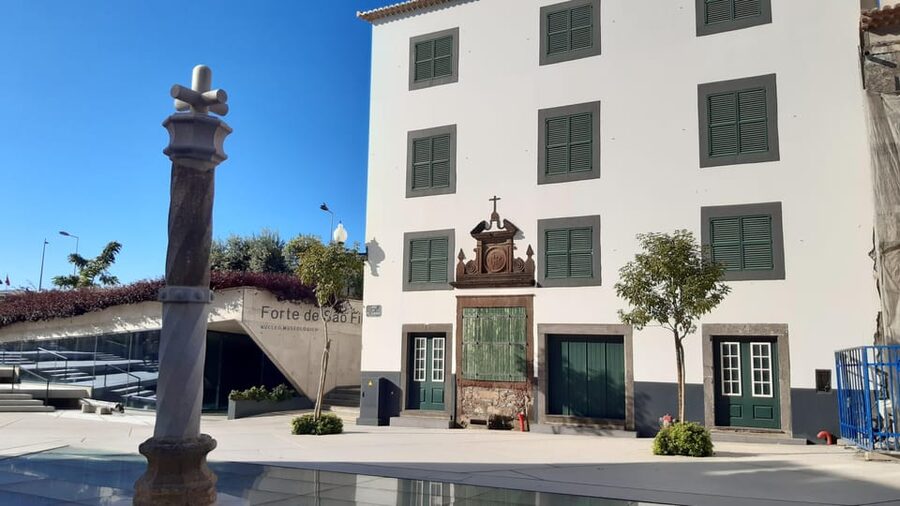
One of the first big stops is Fort São Tiago, a fortress perched above the sea. This is the kind of landmark that makes the city’s history feel real. From the fort area, you can picture why control of the coast mattered so much in maritime routes, when ports like Funchal were not just pretty places to visit, but strategic stopping points.
What I find useful about starting with a fortress is that it sets your mental map. The tour does not treat history like a list of dates. It connects the dots between location and events: the sea is the storyline, and the fort is the proof. Once you see it, it’s easier to understand why later you’ll move through markets and churches that reflect the city’s long relationships with travel, trade, and visitors.
There are often better views for photos here, but don’t turn this into a sprint. The value is in slowing down for the explanation of how the fort relates to the coastline and to the kind of risk coastal towns faced, including pirate attacks mentioned in the tour’s storyline.
If you’re the type who likes to know why something was built, not just what it looks like, this stop is a big win.
Rua de Santa Maria painted doors: street art you can actually use
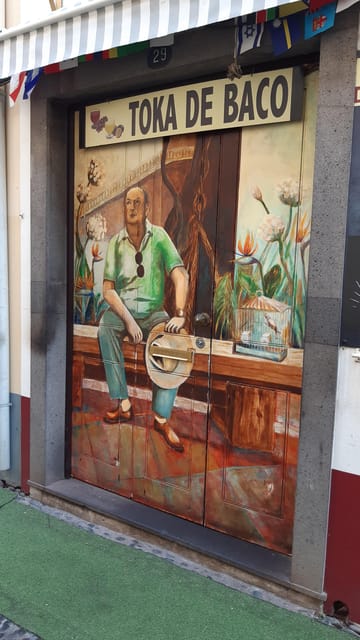
After the fortress, you’ll walk along Rua de Santa Maria. This is where you shift from fortress-scale views to street-level details. The highlight is the colorful and artistic painted doors. Yes, it’s “just doors,” but in older neighborhoods, doors are like little time capsules. They tell you what residents valued, how neighborhoods evolved, and how art shows up in everyday spaces.
I love stops like this because they break up the heavy hitters. Fortifications, churches, cathedrals, and historic estates can blur together if the day is only monuments. Painted doors give you variety and, honestly, better photo results. You also get that small moment of curiosity when you notice something you would have walked past alone.
This part of the walk is also a good chance to check your pace. If your feet need a break, you’ll usually be able to slow down here without derailing the tour flow. Comfortable shoes still matter, but this section tends to feel easier than the later climb toward Quinta das Cruzes.
Come with an eye for patterns. Look at door colors, see where the artwork is placed, and watch how the street character changes as you go. That is where the tour helps you see Funchal as a lived-in city rather than a postcard set.
Lavradores Market: a lively stop for smells, snacks, and reality checks
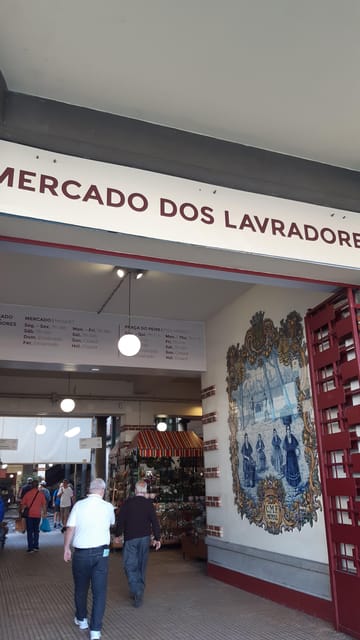
Next up is the Farmers’ Market, Funchal’s food hub known as Lavradores Market. This is one of the most useful parts of the tour because it gives you a real-world look at how people shop and what’s seasonal. Even if you don’t buy much, you’ll learn how to read the market like a local.
The biggest payoff is that the tour frames the market as more than shopping. It’s part of Funchal’s identity, shaped by trade and by the steady flow of visitors over centuries. You get aromas, color, and local flavor cues that can make it easier to order later at a restaurant.
A quick practical note: the tour does not include drinks or snacks. That means if you want to taste fruit, coffee, or anything small, bring a little cash or have a plan to buy it yourself. Still, the stop is worth it even if you just observe. It helps you understand the food culture so your next meal feels less like guesswork.
Also, markets are where you’ll want to stay alert with your belongings. The tour is private and guided, but it’s still a public space. Keep your phone handy for photos, but don’t let it wander unattended.
Same island, a different kind of day:
- Madeira Dolphin and Whale Watching on a Ecological Catamaran
★ 4.5 · 1,957 reviews - VipDolphins Luxury Whale Watching
★ 5.0 · 1,709 reviews - From Funchal: Transfer to Pico do Arieiro & Pico Ruivo Trail
★ 4.9 · 1,591 reviews - Whale and Dolphin Watching Tour in Madeira
★ 5.0 · 1,192 reviews
The green pause and local bread stop: where you reset during the walk
In the middle of the walk, the tour builds in breathing space with time at the Municipal Garden, described as a green oasis in the heart of the city. This matters more than it sounds. Walking tours can become heat traps if you never step into shade, and gardens help you cool down while still staying in the city center.
You’ll also stop at a local bakery. This isn’t about making the tour into a food festival. It’s more practical. A quick bite and a drink (on your own, since refreshments are not included) can keep your energy steady before you head toward Quinta das Cruzes.
I like these pauses because they make the whole route feel doable, especially if you’re not doing huge daily mileage. The pace is meant to be comfortable, and you can often go at your own rhythm, taking photos and listening to context without feeling rushed.
If you’re planning your day around this tour, aim to pack your extras after the bakery stop, not before. In other words, don’t schedule a long sit-down meal immediately before you walk, unless you’re sure you won’t feel heavy and slow.
Quinta das Cruzes: gardens, museum time, and the 200-meter reality check
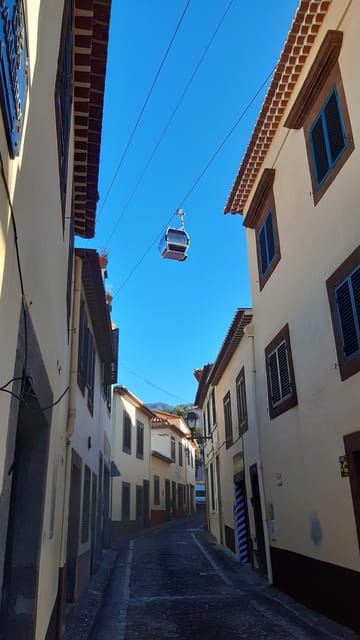
Then comes Quinta das Cruzes, a historic mansion with gardens and the museum portion of the visit. This is one of the tour’s core highlights. The reason it works so well after the market and street walking is contrast. Instead of focusing on commerce and streets, you shift into a curated historic home setting and its landscaped grounds.
The practical catch is the route approach. The information here is clear: you need to walk up about 200 meters and then go down a staircase street. That means you’ll feel the climb, even if you thought the day would stay fully flat.
So plan for that. Wear shoes with solid grip, and take it slow on the uphill section. If your knees or ankles do not love stairs, give yourself extra care on the descent.
This is also where the tour’s storytelling helps you connect place to time. Funchal has been a resting place for European royalty seeking mild climate and landscapes, and Quinta das Cruzes fits that idea of the city as both a travel destination and a refuge.
If you want one part of the tour where you can pause, look around, and feel like you’re stepping into another pace of life, this is it.
Sé Cathedral do Funchal: finishing with the big, unmistakable landmark
You’ll wrap the experience at Sé Cathedral do Funchal. Ending here is smart because it’s easy to recognize and it helps you anchor the day with a major architectural statement. The tour highlights the cathedral as Gothic and as a symbol of Funchal, so this isn’t just a quick stop. It’s a chance to see the city’s religious and civic identity in one place.
I also like endings like this because they give you options after the tour. Once you’ve got your bearings and you understand what the cathedral represents, you can decide where to wander next, whether that’s back toward the center streets or toward viewpoints.
Take a moment at the finish to look up and around. Cathedrals can feel like they’re “all facade,” but the feel changes once you understand the wider city context, which the tour builds earlier through fort, market, and estate history.
And since the tour duration is 2.5 hours, you’ll still have plenty of daylight for a post-tour walk, a meal, or choosing one or two places to revisit on your own.
Price value: what $50 buys, and what to budget for
The price is $50 per person for a 2.5-hour guided walking tour. On a per-hour basis, it’s in the reasonable range for a city walking experience in a place like Madeira, especially because the tour is privately guided and runs with live guides who speak English and Spanish.
What makes the value feel better is that you’re not paying entrance fees for the included stops. That means your cost control is easier. You pay once for the guide experience, and the key attractions are free to access from an entry-fee standpoint.
What is not included is equally important. Drinks and snacks are on you, along with personal expenses and any transfers to or from lodging. So if you want a bakery treat or anything from the market, plan to buy it yourself.
One more plus: the tour lists a carbon neutral footprint. I can’t verify how that’s calculated from the information provided, but the point is that they are at least making an effort on environmental accounting. For many visitors, that’s a small but meaningful tick.
Who should book this Funchal walking tour
Book this if you want:
- A well-paced city walk that balances major sights with small street details
- A guide who can explain what you’re seeing, in English or Spanish
- Stops that help you understand Funchal as a place shaped by the sea and by centuries of visitors
You might skip it if:
- You have trouble with stairs or you want to avoid the uphill and stair-street section near Quinta das Cruzes
- Your group includes someone outside the tour’s suitability limits, such as children under 6, wheelchair users, pregnant women, people over 70, or people over 80
Also, it’s not a good fit if you rely on bringing pets, since pets are not allowed. Bikes are also not allowed on the tour.
Should you book it?
If you’re spending limited time in Funchal and want the city’s top landmarks plus the small details that make the streets feel real, this tour is a strong choice. Starting at Jardim do Almirante Reis by the Mosquito steamboat gives you a clear anchor, and the route ends at Sé Cathedral so you finish with a natural landmark to orient from.
The main decision point is physical comfort. If you can manage about a 200-meter uphill stretch and some stair street walking, you’ll get a lot for your time. If that’s harder, still consider doing parts of the route on your own, but this guided setup may feel stressful.
FAQ
How long is the Funchal walking tour?
The tour lasts about 2.5 hours.
What time does the tour run?
Starting times are at 10 am and 11 am, Monday to Saturday.
Where do I meet the guide?
Meet next to the steamboat Mosquito at Jardim do Almirante Reis. The guide holds a Portuguese flag.
What language is the tour in?
The live tour guide speaks English and Spanish.
Is there an entrance fee for the places on the tour?
Entrance fees are not required for the places visited, so you can explore without additional entrance costs.
What is included in the price?
You get the guided walking tour with the listed stops, plus a carbon neutral footprint is noted.
What should I bring with me?
Bring comfortable shoes, sunglasses, a sun hat, a camera, drinks, sunscreen, water, and comfortable clothes.
Is the tour suitable for everyone?
It is not suitable for children under 6, wheelchair users, pregnant women, people over 80, and people over 70. Pets are also not allowed.
Recently added around Funchal
- The Lakes Walk★ 5.0 · 13 reviews
- The ultimate tour (2 days)★ 4.5 · 4 reviews
- Enchanting North – Full Day- Shared Tour★ 5.0 · 10 reviews
- The Espetada Evening Food and Cultural Tour★ 5.0 · 5 reviews
- The Fantastic Cascades★ 4.5 · 13 reviews
- traditional Farmers Market Open 4X4 Half Day Tour★ 5.0 · 10 reviews
- Sunset Tour @ Pico Do Areiro | Half Day 4×4 Tour★ 5.0 · 36 reviews
- Stairway to Heaven Pico do Areeiro in Madeira Island★ 5.0 · 4 reviews