Reviewed · LEVADA WALKS
Referta / Castelejo – Levada Walk
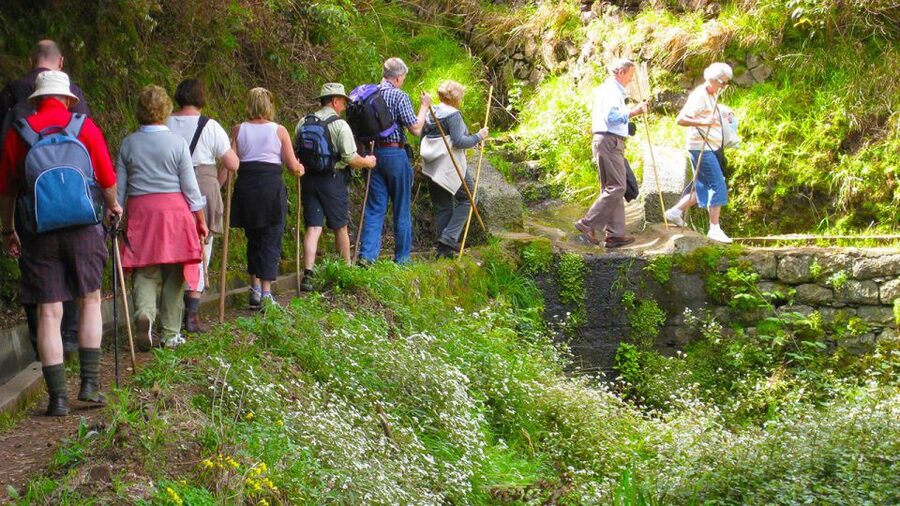
This Madeira hike is interesting because it mixes an easy walk with big natural drama. You follow old levada paths along the northern coast, then you end up looking up at Penha d’Águia and the tall, soaring rock of Eagle’s Rock.
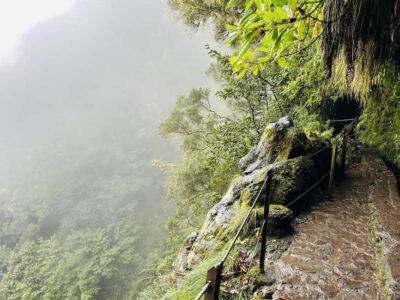
I love the fact that it’s a mostly flat route, so the focus stays on views, plants, and taking photos, not on scrambling. I also like the way the guide connects what you see to the island, including how levada water once powered an old water mill. One possible drawback: the trail can feel busy, and after rain some parts can be wet and muddy, with railings missing in a few spots.
Key things you will notice on this Referta to Castelejo levada walk
- Flat, easy going that still delivers real Madeira scenery for people who want a calmer day
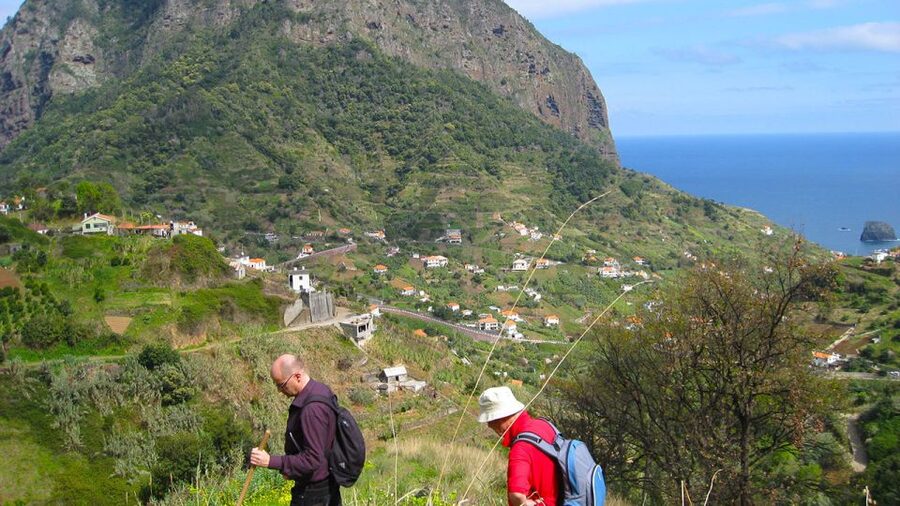
- Penha d’Águia view, a well-known rock landmark you’ll keep returning your attention to
- Eagle’s Rock at about 590 meters, where your walk builds toward a dramatic finish
- Endemic flora and fauna, with a guide who points out what you would otherwise walk past
- Water mill remains by the finish area, tied to how levada water was used to saw wood
- Poncha, cake, and small purchases nearby, with some stalls accepting only cash
Why this easy levada walk is a smart Madeira day
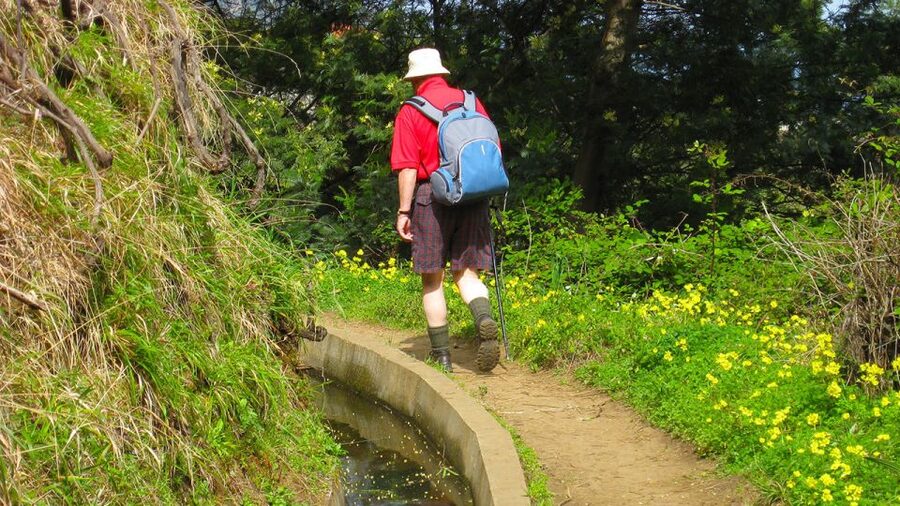
If you want Madeira without spending your whole day hiking uphill, the Referta/Castelejo levada walk hits a sweet spot. You get outdoors time, fresh air, and a genuine sense of place, but the route is built for walking. The path follows old levada channels, so you are always moving through a green corridor rather than climbing a trail that demands constant effort.
What really makes it work is the balance between effort and payoff. The hike is gentle enough that you can slow down to read the terrain, and the views keep improving as you go. The northern coast villages add a human touch, and the big rock landmarks give you that Madeira “how is this even here?” feeling.
Another reason I like this style of walk: you are not just looking. You are learning how the island functions. The route culminates near Eagle’s Rock, and right beside that, you have an ancient water mill linked to the levada system. That connection turns the hike from pretty scenery into a living story about how people used water and terrain to survive.
My advice is to bring your camera habits with you. This is the kind of walk where unhurried pacing really matters. You want time to step aside, watch the light shift on the rocks, and listen when the guide points out plants you would never name on your own.
More levada walks on the island:
- Madeira: Enjoy a Guided Levada Walk in the Rabaçal Valley
★ 4.7 · 2,197 reviews - Rabaçal: 25 Fontes & Risco Levada Transfer Self-guided Hike
★ 4.8 · 841 reviews - Madeira East Island Tour and Levada Walk
★ 4.5 · 787 reviews
The 4-hour route: what happens from pickup to the first steps
This tour runs for about 4 hours, and it usually starts with a pickup when your hotel is in the pickup zone. Pickup is available from selected hotels in Funchal, Câmara de Lobos, and Caniço, and if your hotel is hard to reach or there is no convenient parking, the meeting point may shift to a close alternative.
If you are staying in the Lido area, you meet at the office at Monumental Lido. The staff also sends pickup reminders by email, SMS, or WhatsApp the day before, so double-check that message. It saves you stress on a day when your main job is to enjoy the walk.
Once you reach the trailhead, the group gets an orientation from the guide. Then you walk along paths built long ago beside the levada. The early section includes some steps, and one part of the descent can feel more noticeable than the rest. After that, the route settles into level walking for most of the time.
In practical terms, that means you can keep a relaxed rhythm. You’ll still want good shoes, especially if the weather recently turned. Some sections can be wet or muddy after rain, and railings are not everywhere. The good news is that the overall effort level stays in the easy category, which is exactly why people choose this one as their first levada experience on Madeira.
Plan for frequent photo stops. The scenery is not one big moment you see once and move on. You get repeated “wait, look at that” views as the trail passes village edges and opens toward major rock formations.
Old levada paths and northern coast villages, why the route feels so satisfying
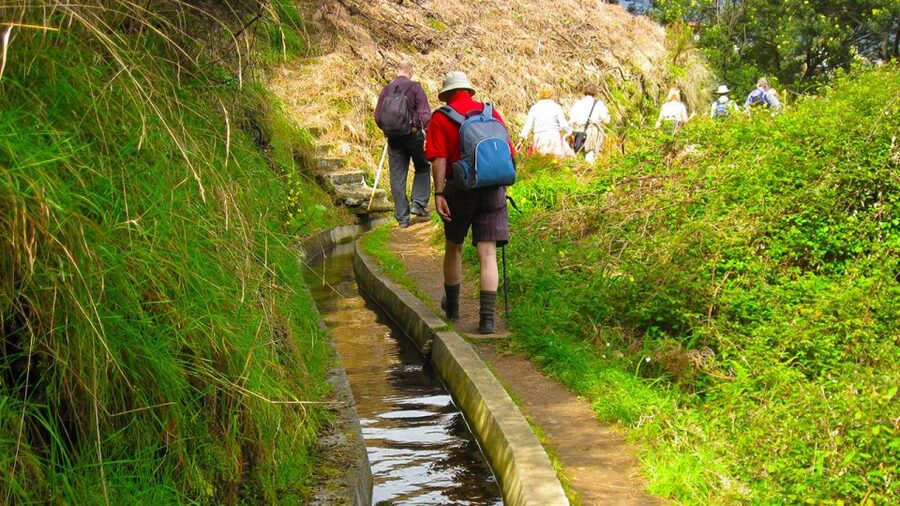
The heart of this experience is the levada walking itself. Levada routes are Madeira’s signature, and they are special because they are not random footpaths. They follow engineered channels and older maintenance paths, which means you get a steady, walkable grade through the island’s green zones.
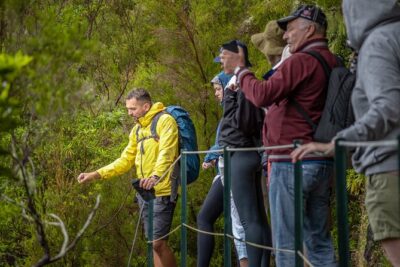
As you go, you’ll pass through areas where the vegetation feels lush and thick. The walk is designed to show you details: the guide highlights native plants and points out endemic flora and fauna that most people would miss. If you like nature walks but you get bored when there’s nothing to identify, this format helps. You keep learning small things every 5 to 10 minutes, which makes the miles feel shorter.
Meanwhile, the northern coast villages keep popping into view. Even if you do not stop in a town, you get glimpses that help you understand how the island is shaped for living, farming, and water management. That mix matters. It’s not only wilderness. It’s wilderness with context.
Pacing is another big deal. Guides tend to keep a calm tempo, which is what you want on a mostly-flat hike. You are not sprinting to beat the group. You are walking at a speed that lets you absorb what you are seeing and take breaks without feeling like you are holding people back.
One honest heads up: this route can be popular. If you are sensitive to crowds, you might still feel other groups around you on certain sections. It’s not a reason to skip it, but it’s useful to know so you can treat it like a social trail and not an empty wilderness escape.
Penha d’Águia and Eagle’s Rock: how to look at the scenery like a pro
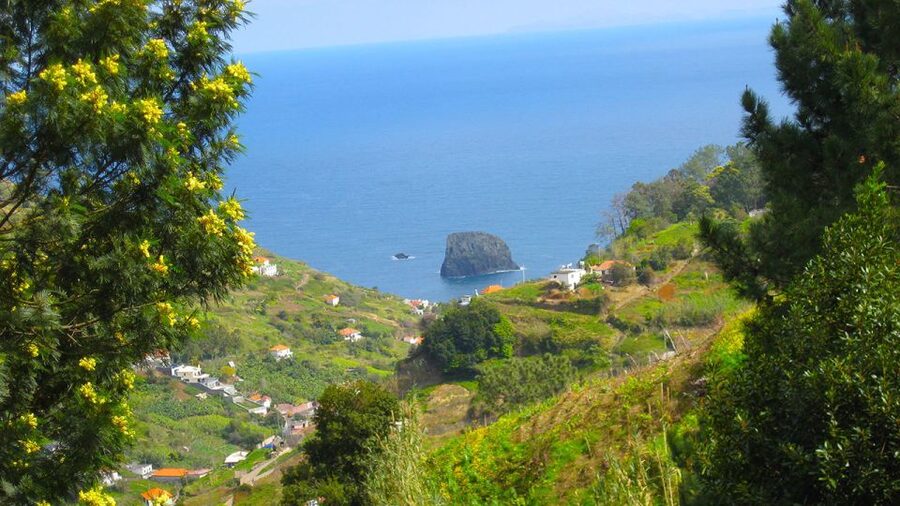
Penha d’Águia is the first “big rock” moment that draws your attention. It’s described as a well-known rock formation on the island, and you can see why. It is imposing in a way that feels out of scale with the greenery around it. As you keep walking, your eyes start doing what they should on Madeira, which is constantly switching between the green path underfoot and the massive forms overhead.
Then the route builds toward Eagle’s Rock. This soaring monolith is said to reach about 590 meters. That number is not just trivia. It changes how you experience the view. Even on a clear day, a rock of that size dominates the horizon, and you get a sense of the island’s vertical attitude, even when the trail beneath your feet is gentle.
When you’re near the viewpoint areas, try a simple tactic. Look in layers:
1) the levada path and plants close to you
2) the coast and village shapes in the mid-distance
3) the rock mass on the horizon
This helps you avoid tunnel vision. You start noticing how the island’s water system routes people through specific corridors, and how those corridors were designed to take advantage of the terrain.
The guide’s role is important here. The best part is not only pointing out what the rocks are called. It is connecting them to the island’s resources and history, so you understand why the view matters, not just that it looks dramatic.
More walking tours in Madeira:
- Funchal: Old Town Walking Tour
★ 4.7 · 3,233 reviews - Funchal: East Madeira Island Guided Tour & Laurissilva Walk
★ 4.8 · 1,194 reviews - Madeira: Food and Wine Walking Tour in Funchal
★ 4.8 · 469 reviews - From Funchal: Madeira Peaks Mountain Walk
★ 4.8 · 380 reviews
The ancient water mill near the finish, and why it makes the hike feel meaningful
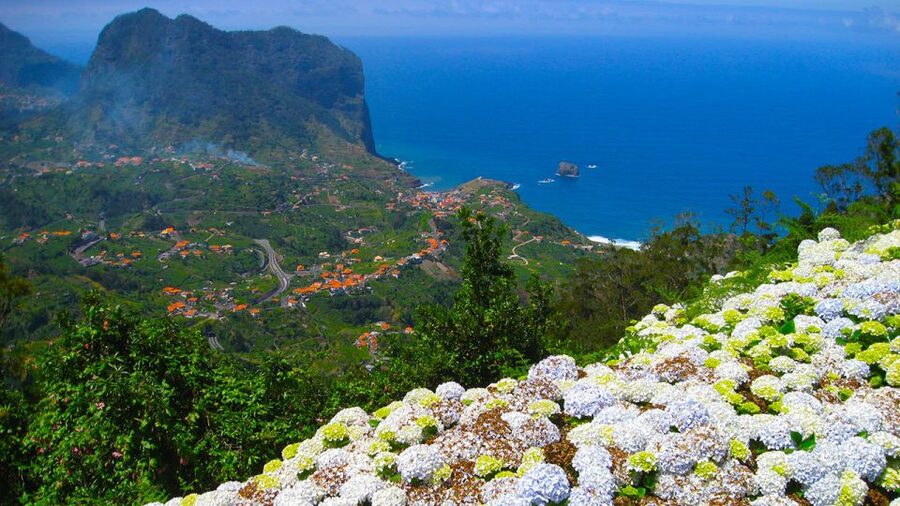
Near the end, you get a natural wonder moment, then a history moment right beside it. Adjacent to Eagle’s Rock, there is an ancient water mill. The key detail is what it did: it used the levada’s waters to saw wood.
That connection is easy to miss if you are only focused on the rock. But once you notice the mill area, the whole walk starts to make more sense. Levada systems were not built for sightseeing. They were built to move water where it needed to go. That water then powered practical jobs like sawing wood, which helped communities build and maintain homes and tools.
So you finish with more than a photo. You finish with a clearer idea of how water shaped daily life on Madeira. It’s one of those details that makes an easy hike feel richer than it sounds.
This is also where the walk’s mood changes slightly. The terrain stays easy, but your attention shifts. Instead of just asking what plant is that, you start asking what did people do here, how did they use the land, and why is this area positioned where it is?
It’s the kind of thinking that keeps you engaged in the last stretch, which is often where easy hikes lose steam. Here, the finish helps you feel satisfied.
Porto da Cruz at the end: poncha, cake, and small stops you should plan for
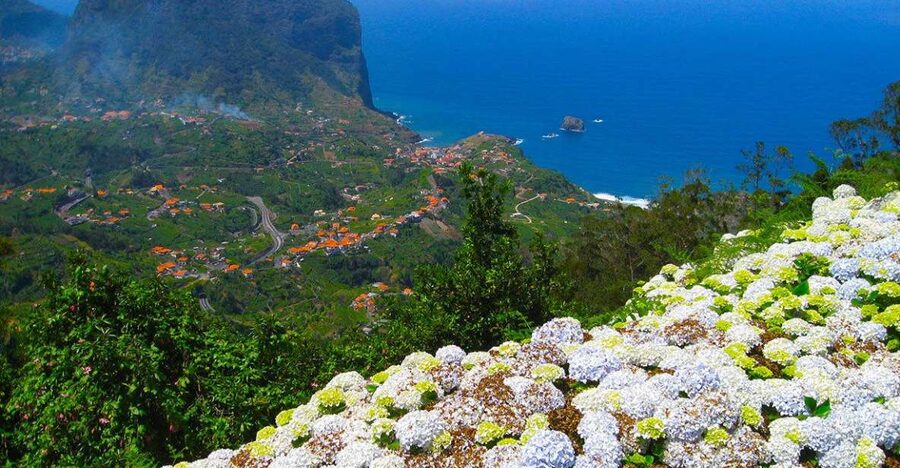
After the core walk, you end near Porto da Cruz. This is where the experience becomes very Madeira in an everyday way: food, drink, and small purchases in a casual setting.
A common highlight is a café stop for poncha and cake. Poncha is Madeira’s famous spirit, usually citrus-based and served fresh. Based on what people have described, this pause is a welcome reward, especially because the hike itself stays unhurried and not exhausting. You get that nice rhythm: walk, look, learn, then slow down with something local.
There’s also a practical tip if you plan to buy snacks or small items at the end. Some nearby places may only accept cash, so keep a small amount ready. The same goes for small purchases from farmers you might encounter around the levada area. One example shared a direct buy of fruit and vegetables from farmers, priced around 0.50 to 1 euro per piece. Even if you skip it, it’s a neat way to see how locals live alongside the levada network.
If you care about value, this matters. You are paying for the guide and the walk. You are not paying for a full lunch. So think of the end stop as optional, like a casual add-on. You can do it lightly with cake, or make it a more proper break if you are hungry.
The best strategy is simple: don’t assume everything will be card-friendly, and don’t plan on a long sit-down meal. This is a short, focused hike with a local refresh at the finish.
Price, languages, and pacing: is $38 worth your time?
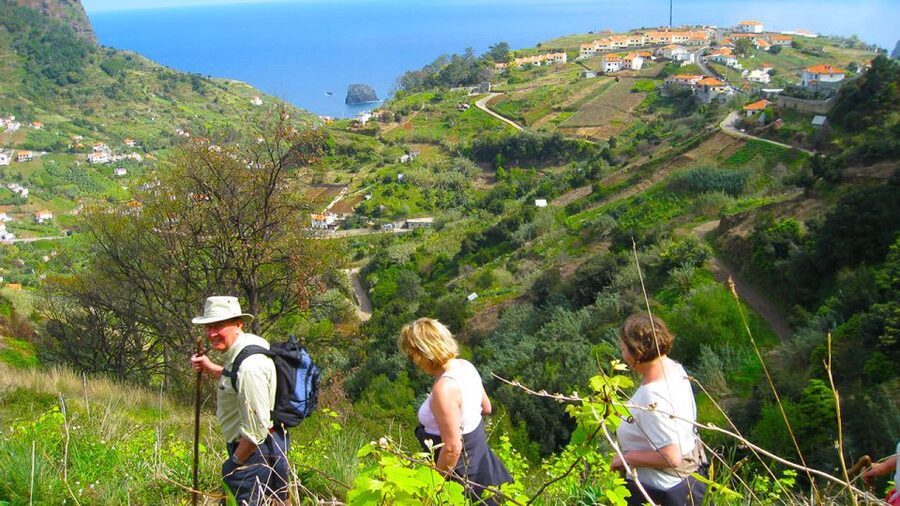
At about $38 per person for a 4-hour guided hike, the value is solid if you want a structured way to experience the levada. You are paying for several things at once:
- transportation pickup from key bases in the Funchal area
- a live guide in multiple languages
- time on an easy trail with planned viewpoints
- included taxes and fuel surcharges
You do not get lunch included, so you should budget a bit for the end-of-walk café stop if that’s part of your plan.
The guide matters a lot for this tour. The best experiences tend to happen when the guide keeps the walk calm but gives enough information to change what you notice. People have described guides who explain flora and fauna and share fun, practical facts along the way. Names that have come up include Sergio and Sarah, and at least one guide called Ferra was mentioned too, each with an enthusiastic style that kept the pace easy.
Language options are broad: the live guide speaks Spanish, English, French, German, and Portuguese. That means you are less likely to feel lost, even if your Portuguese is still in progress.
Who this suits best:
- first-time levada walkers who want something easy
- people who dislike steep climbs but still want meaningful views
- families and older folks who want a manageable route with a guide
- anyone who likes nature details paired with local history
Who might want a different Madeira plan:
- people seeking a tough workout or long mileage
- anyone who hates mild crowds on popular levada routes
- those who need railings everywhere, since a few sections may have limited protection
Tips to make the walk easy, safe, and photo-friendly
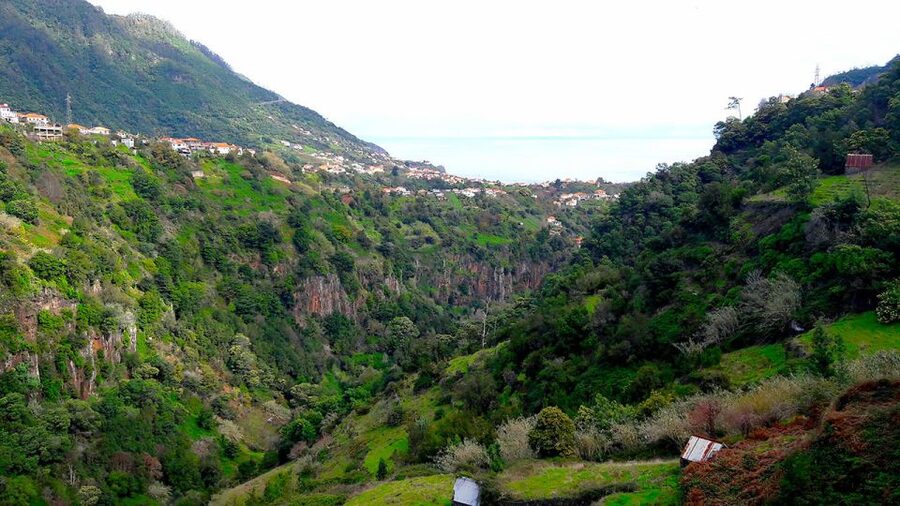
This is an easy hike overall, but you still need to dress for Madeira weather, not the forecast on your phone. Some parts can be wet or muddy after rain, and railings are not guaranteed along every stretch.
So here are practical moves:
- Wear shoes with grip. Even on a flat route, wet rock and mud can be slick.
- Expect a few steps at the start. It’s not a full scramble, but you’ll feel it in your legs.
- Bring a light layer. Even when conditions look pleasant, trails can stay cooler in shaded areas.
- If you plan to buy poncha, cake, or snacks, keep some cash on hand just in case.
Also, keep an eye on the rock landmarks as the group moves. Don’t wait until the viewpoint. Start tracking Eagle’s Rock and Penha d’Águia earlier. Your best photos often come from earlier angles, when the scenery framing is wider.
Most of all, treat this as a calm nature walk with a few big highlights. If you expect a race, you will miss the point.
Should you book this Referta/Castelejo levada walk with Lido Tours?
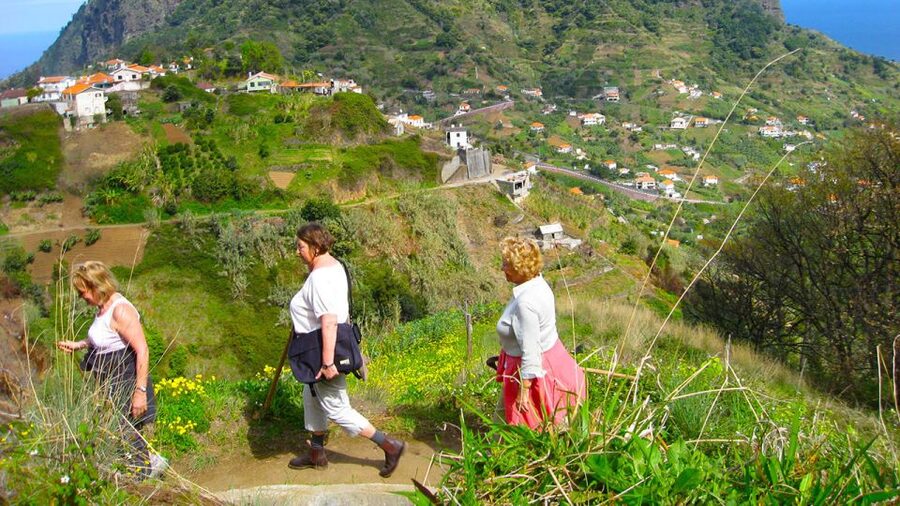
If you want a Madeira day that feels outdoorsy but not punishing, I think this is an excellent booking. The mostly flat trail, the endemic plant focus, and the clear story at the end with Eagle’s Rock and the water mill make it more than a quick stroll. Add in the unhurried pace and the chance to grab poncha near Porto da Cruz, and you get a satisfying half-day.
Book it if:
- you want an easy levada walk with real landmarks
- you enjoy guides who explain what you see
- you prefer structured activities with pickup included
Skip or consider another option if:
- you are looking for steep, sweaty hiking
- you have zero tolerance for mild crowds
- you require lunch to be included, since there is no lunch in the package
For many people, this is a first levada win. It lets you enjoy Madeira’s nature and history without turning your vacation into an ankle-and-knee project.
FAQ
How long is the Referta/Castelejo levada walk?
The tour lasts 4 hours.
What is the price per person?
The price is listed at $38 per person.
Is lunch included?
No, lunch is not included.
What languages is the live tour guide available in?
The guide is available in Spanish, English, French, German, and Portuguese.
Where does pickup happen?
Pickup is available from selected hotels in Funchal, Câmara de Lobos, and Caniço where possible. If your hotel is in the Lido area, you meet at the office at Monumental Lido. If your hotel has no easy access or parking, you will be sent an alternative pickup point close to your hotel.
Can I cancel for a refund, and do I have to pay right away?
Yes. You can cancel up to 24 hours in advance for a full refund. You can also reserve and pay later, booking your spot without paying today.
Recently added around Madeira
- Toboggan Ride & Madeira Wine Tasting Tour★ 2.8 · 4 reviews
- Surf lesson in Madeira★ 4.8 · 55 reviews
- Madeira : Surfing Experience for all★ 4.8 · 36 reviews
- Sunset Tour @ Pico Do Areiro | Half Day 4×4 Tour★ 4.7 · 3 reviews
- South Madeira: breathtaking coastal trip incl. Porto Moniz.★ 4.7 · 19 reviews
- Madeira Island: Southwest Tour★ 4.4 · 12 reviews
- Southwest Madeira: Half-Day Cabriolet Jeep Adventure★ 5.0 · 4 reviews
- Madeira: Signature Wine Tasting, Skywalk & Nature Expedition★ 4.7 · 49 reviews
Levada Walks, compared.
Enjoy a Guided Levada Walk in the Rabaçal Valley
Read our review →
25 Fontes & Risco Levada Transfer Self-guided Hike
Read our review →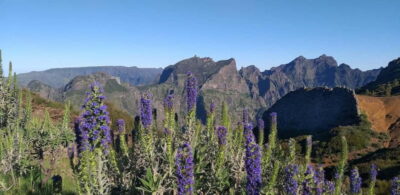
Skywalk 4×4 Experience and Rabacal 25 Fountains Levada Walk
Read our review →
Levada Walk and Caldeirao Verde Waterfalls: Madeira
Read our review →
25 Fountains Levada: Hiking Tour in Madeira Rabaçal Valley (PR6)
Read our review →Browse the lists this tour appears in