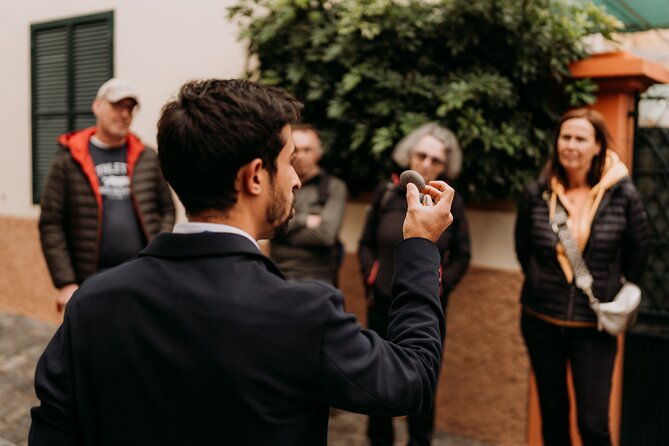
Reviewed · CITY TOURS
Ribeira Brava: The barn of the first atlantic city – Private Tour
What makes this tour interesting is how it turns Madeira’s geology into something you can point at, right in Ribeira Brava. Instead of big abstract lectures, you get a guided read of the valley and buildings, with the island’s story tied to what’s in front of you.
Two things I really like: I love the way the guide connects major island events, especially flash-flood history, to visible clues in the town, like alluvial deposits and lava flows you can observe in place. I also like the guidance style, with local experts such as Sandro and Santosh explaining clearly and then sharing practical ideas for food and where to stay.
One drawback to consider is that this experience depends on good weather, and it’s built for standing and walking around a historic center. Also, private transportation is not included, so you will want a simple plan for getting to the Fort of São Bento.
Key highlights to expect
- Geology you can see in situ: quaternary alluvial deposits and lava flows turned into a real-world map
- Flood history that has evidence: flash-flood events explained through what you’re looking at on the ground
- Ribeira Brava’s planning made readable: how the village space and buildings relate to the terrain
- Architecture with engineering details: the manor house of Captain Luis Gonçalves Silva as a case study
- Sugar cane and paving as culture: mills and Portuguese versus Madeiran pavement styles linked to daily life
- Small, private pacing: it’s your group only, and refreshments are included
Why Ribeira Brava Feels Like an Outdoor Classroom
Ribeira Brava is the kind of town where you can easily stroll past the important bits. This tour fixes that. You start with the broad story, how Earth formed and how Madeira as an archipelago took shape, then the guide brings that story down to street level. That shift is the magic trick here: science and culture stop being separate topics.
You’ll also get a sense of why this works so well in Madeira. The island is not just scenic, it’s active in its history. Valleys, water, volcanic rock, and human building decisions all meet in one place. Once you start seeing those connections, the rest of your time on Madeira gets easier, because you’ll know what to look for.
If you like tours that explain the why behind what you’re walking through, you’ll probably enjoy this approach a lot.
A few more Madeira days worth comparing
- Madeira: Private Funchal City Tour in a Tukxi
★ 4.7 · 684 reviews - Funchal Private 4-Seater VIP Mercedes / 8-Seater Minibus
★ 4.9 · 223 reviews - Madeira “Mystery Tour” – Full Day Private 4×4 Jeep
★ 5.0 · 199 reviews
Starting at the Fort of São Bento, and Reading the Town Right Away

The experience begins at the Fort of São Bento, in Ribeira Brava. That matters more than it sounds. Forts are usually built where sight lines and geography help protect a community. From there, the tour moves into the historical center and valley, and suddenly the walking route feels like a guided puzzle.
You can expect the guide to set up the big themes early: the Madeira archipelago, how settlement unfolded, and why the geography shaped where people could safely live and build. Even when the tour turns into specific stops, the overall thread stays clear. That keeps it from feeling like a random list of sights.
One practical note: the activity ends back at the meeting point. So you don’t need to plan a complicated second transportation leg. You just come, do the circuit, and head back.
Madeira’s Geology, Explained by What You Can Observe
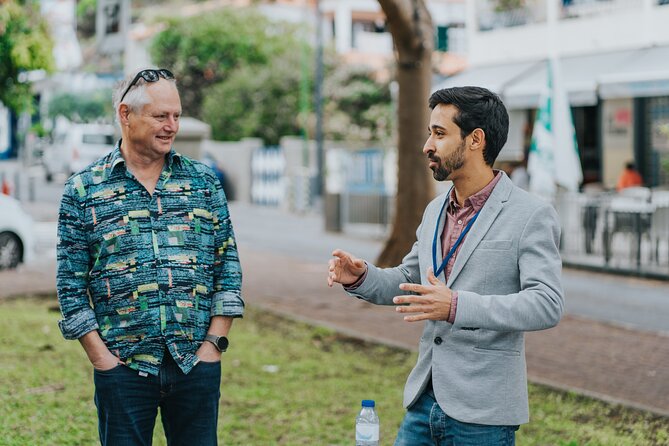
This tour’s geological angle is its backbone. You’ll get an introduction to how the Madeira archipelago formed and what makes it distinctive, then the guide narrows the focus to the Ribeira Brava setting.
Flash floods: the danger that shaped settlement
One of the most useful parts is the explanation of flash floods on Madeira. It’s not presented as fear-mongering. It’s framed as an environmental force that helped determine where and how people developed the valley. When you understand flooding as a recurring process rather than a one-off disaster, you start noticing why town layout and building choices make sense.
Same island, a different kind of day:
- From Funchal: Ecological Catamaran Dolphin Whale Watching
★ 4.5 · 5,771 reviews - Madeira: Skywalk, Porto Moniz, Seixal, and Fanal 4WD Tour
★ 4.9 · 5,732 reviews - Funchal: Dolphin and Whale Watching Catamaran Cruise
★ 4.5 · 5,697 reviews - Funchal: Enchanted Terraces, Porto do Moniz & Fanal 4WD Tour
★ 4.8 · 4,930 reviews
Quaternary deposits and lava flows you can spot
Then comes the hands-on, in-place observing. You’ll look at quaternary alluvial deposits and subaerial lava flows. Those phrases might sound academic at first, but the real value is translation: the guide helps you connect rock types and sediment traces to water behavior, erosion, and volcanic history.
What I like about this part is how it trains your eyes. After a tour like this, you’ll be less likely to treat the ground as background. You’ll read it as evidence.
How settlement ties into the island’s physical story
The tour also pulls the settlement thread forward. You don’t only learn about rocks and hazards. You learn how Portuguese settlement unfolded with the terrain in mind. That gives the geological facts context, and context is what makes the information stick.
If you’re curious about the island beyond beaches and levadas, this section is the turning point.
How Ribeira Brava’s Spatial Planning Makes Sense on the Ground
After the geology comes the town itself. The guide interprets spatial planning of Ribeira Brava, and this is where the tour becomes more than science and turns into lived geography.
You’ll see how a valley settlement can be shaped by steep slopes, water movement, and the need to adapt infrastructure to real conditions. Even if you don’t remember every technical term, you’ll likely remember the pattern: buildings and paths don’t just happen. They respond to the land.
This is a big deal for visitors because it changes your walking rhythm. Instead of scanning for postcard views only, you start looking for logic. Where does water go? What parts feel safer for building? How does the town stretch along contours?
That is the kind of skill you can use the rest of your trip.
Captain Luis Gonçalves Silva and the Manor House Engineering Details
One of the tour’s standout cultural stops is the manor house associated with Captain Luis Gonçalves Silva. The key here is that it’s not treated as a lonely monument.
You’ll observe engineering particularities tied to how the building works in its environment. Madeira buildings often have practical responses to rain, humidity, slope, and available materials. When the guide points these out, the architecture stops feeling decorative and starts feeling purposeful.
If you like architectural reasoning, not just dates, you should enjoy this stop. It gives you another way to understand the island’s mix of risk, adaptation, and craftsmanship.
Heritage Stones and What They Add to the Story
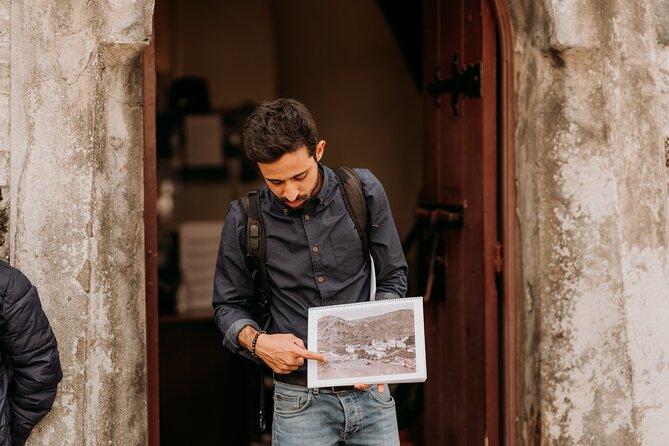
The tour also includes an observation of one of the Portuguese Global Heritage Stones. This is another example of the guide connecting the abstract to the tangible.
Stones aren’t just rocks. They’re material culture. They affect building styles, durability, and maintenance. When you learn how a specific stone fits into the larger Portuguese heritage framework, you get a better sense of what “Madeira identity” means at the material level, not just the scenery level.
Even if you don’t become a stone collector after this, you’ll likely notice different rock and surface choices around town much more clearly.
Sugar Cane Mills, Madeira’s Economy, and Everyday Life
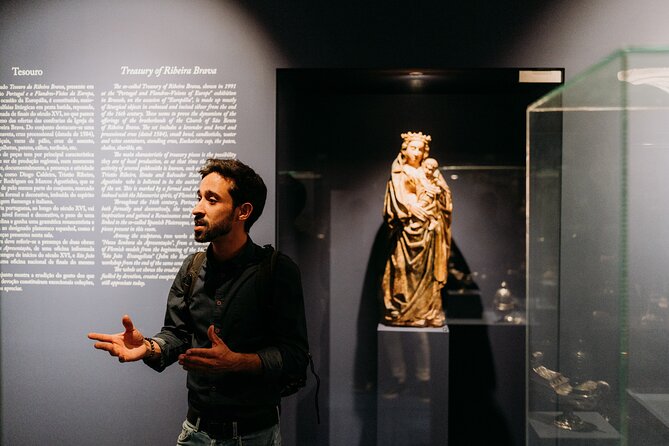
Next you’ll look at sugar cane mills and how they relate to Madeira’s socio-economic evolution. This is a smart inclusion, because it explains why the island’s communities grew the way they did.
Sugar shaped labor, trade, and wealth. It also shaped physical infrastructure, because mills need space and reliable processing. When the guide ties sugar mills into the broader historical timeline, the valley becomes more than a natural setting. It becomes a workplace shaped by economic cycles.
You’ll likely walk away understanding that Madeira’s history is not only political. It’s also industrial and practical. People built systems to turn the island’s resources into survival and growth.
Portuguese and Madeiran Pavement Styles You Can Spot as You Walk
A surprisingly fun part is the comparison of pavement styles, including Portuguese-pavement style and the Madeiran-pavement style. This might sound like a small detail, but it’s one of those things you only appreciate once someone points out what to look for.
Paving affects traction, drainage, comfort, and durability, especially in places where rain and steep ground matter. When you understand that, pavement stops being decorative. It becomes another clue in the story of adaptation.
This is also the part that makes the tour feel grounded. You’re learning through your feet. You can feel the difference in how areas look and function as you move.
How the Guide Makes It Click, From Explanations to Tips
The quality of this tour is largely about translation. Guides in this experience, including Sandro and Santosh, are praised for being patient and for explaining in a way that stays clear even when the topic gets technical. That matters, because geology and architecture can quickly turn into jargon-heavy sightseeing.
In practice, you’ll get a pace that lets you ask questions as you go. And you’ll pick up real-life pointers, like restaurant and hotel suggestions, tied to what you’re learning about the island. That adds value because it helps you convert tour inspiration into actual decisions for the rest of your trip.
If you like a guide who can answer curiosity without rushing you, this is a good match.
Price and Value: Is $40.33 Worth It?
At about $40.33 per person for roughly 2 hours 30 minutes, this tour sits in a value range for Madeira guided experiences. The real question is what you get for that price.
You receive a local guide, bottled water, coffee and/or tea, and alcoholic beverages. That matters more than it sounds. It turns the walk into a comfortable, stop-and-explain experience rather than a quick, dry information sprint. Admission is free for what’s included, so you are not paying extra at the door for the main elements.
The one cost to factor in is transportation. Private transportation is not included. If you’re staying in Ribeira Brava or can reach the Fort of São Bento easily, the overall cost-to-effort ratio looks strong.
For me, this tour earns its price by doing two things at once: it teaches you how the island works physically, and it does it using places you can actually see, not just photos.
Who This Tour Suits Best (And Who Might Prefer Something Else)
This experience fits best if you want:
- A geology and history angle on Madeira that connects directly to streets and buildings
- A guide-led walk where explanations stay practical
- A slower morning option that helps you understand what you’ll see later in the day
It also suits you if you’re the kind of traveler who likes learning how and why, not only what. The itinerary leans into hazards, materials, settlement logic, and economic change, which makes it ideal for curious minds.
You might consider another type of tour if:
- You prefer beach time or scenic viewpoints only
- You dislike walking and standing for extended explain-and-observe moments
- You’re traveling during weather that’s not reliable, since good weather is required
Practical logistics: timing, meeting point, and pacing
The tour meets at Fort of São Bento, at R. Gago Coutinho e Sacadura Cabral, 9350-216 Ribeira Brava, Portugal. It ends back at the same meeting point, which keeps things simple.
Opening hours listed include Saturdays from 10:00 AM to 12:30 PM. Confirmation is received at booking, and the experience is designed for most travelers. Service animals are allowed, and it’s near public transportation.
Because it’s a private tour/activity, only your group participates. That usually means less crowd pressure and more room for questions.
Should You Book This Private Tour in Ribeira Brava?
Yes, I think you should book it if you want a Madeira experience that goes beyond the usual postcard route. This tour is built to make Ribeira Brava feel meaningful, not just pretty, by using geology, flood history, settlement logic, and architecture as your guide.
It’s especially worth it if you’re the type of traveler who keeps asking, Why did people build here? How did the island shape daily life? The answers are the whole point of the walk.
Skip it only if your main goal is relaxed scenery with minimal walking or if weather is likely to be poor during your stay. If you can line it up on a solid morning and you’re open to learning, it’s one of the better ways to get a real sense of Madeira’s character quickly.
FAQ
How long is the Ribeira Brava private tour?
The tour duration is approximately 2 hours 30 minutes.
Where does the tour start and end?
It starts at Fort of São Bento at R. Gago Coutinho e Sacadura Cabral, 9350-216 Ribeira Brava, Portugal. The activity ends back at the meeting point.
What is included in the tour price?
Included are a local guide, bottled water, coffee and/or tea, and alcoholic beverages. Admission is listed as free for the included elements.
Do I need my own transportation to reach the meeting point?
Private transportation is not included, so you’ll need to handle getting to the Fort of São Bento yourself. The meeting point is near public transportation.
What happens if the weather is bad?
This experience requires good weather. If it’s canceled due to poor weather, you’ll be offered a different date or a full refund.
Is it really private?
Yes. It is a private tour/activity, and only your group will participate. Service animals are allowed, and most travelers can participate.
Recently added around Madeira
- Madeira: Wine Safari Jeep Tour with Local Guide★ 3.9 · 6 reviews
- West Tour Porto Moniz★ 4.6 · 26 reviews
- Funchal: Maderia Island Off Road Jeep Tour with Swim Stop★ 5.0 · 11 reviews
- Visiting local Vineyard With Wine Tasting & Lunch included★ 5.0 · 6 reviews
- Tuk Tuk Monte Toboggan – Madeira Island★ 4.1 · 4 reviews
- Full Day Open Roof 4×4 Unforgettable Northwest of Madeira★ 5.0 · 22 reviews
- Wine Tasting Experience in Boaventura, Madeira North Coast★ 4.5 · 28 reviews
- Lakes of Madeira- Alecrim Full day walk★ 4.0 · 9 reviews
City Tours, compared.


City Sightseeing Funchal Hop-On Hop-Off Bus Tour
Read our review →
Madeira Funchal City Historical Tuk Tuk Guided Tour by MadTuk
Read our review →Browse the lists this tour appears in